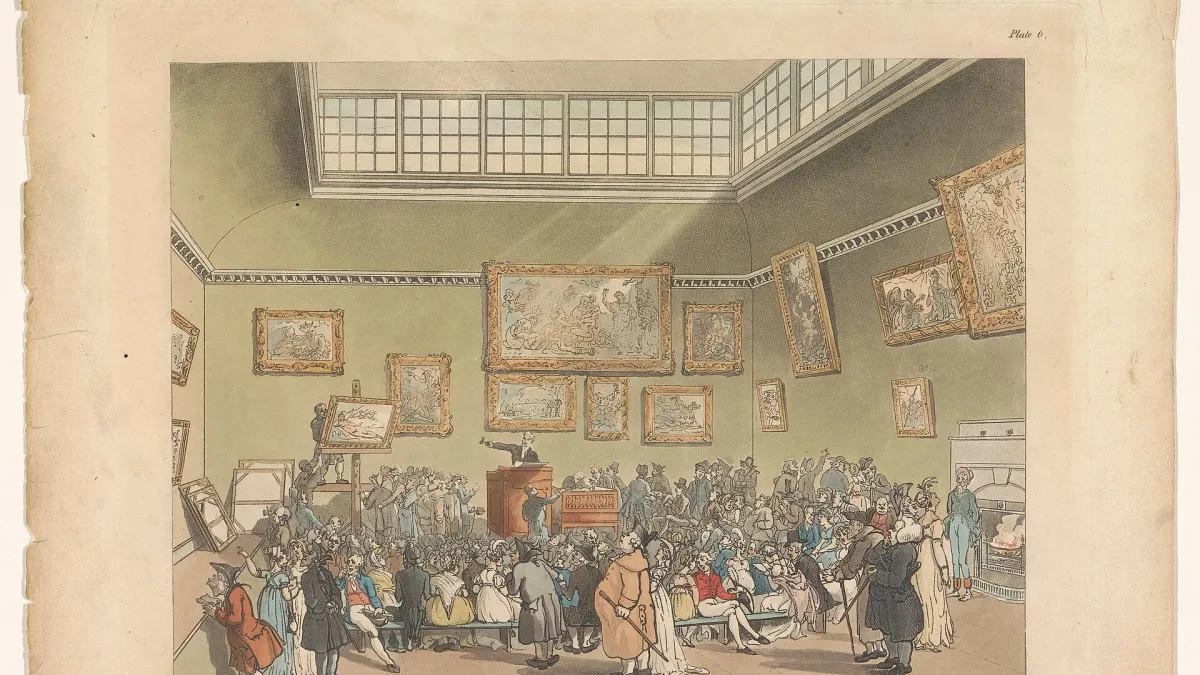
The hammer falls at HK$8 million and the room applauds the wrong number. By the time the buyer has settled the account — premium, taxes, shipping, insurance — the painting costs a fifth to a quarter more than the figure that made the sale report. Everyone in the room knows this. First-time buyers learn it from the invoice.
What the ladder takes
Both Sotheby's and Christie's publish a buyer's premium ladder, and the rungs are similar: roughly 28 per cent of the hammer price on the lowest bracket, 22 on the next, and 15 at the top. The thresholds differ by saleroom and creep upward over the years, but the shape never changes. The smaller your bid, the dearer it is proportionally.
Build the premium into your limit before the sale, not during it. A maximum hammer price is a decision made in a quiet room; the auction is designed to unmake it.
The premium is not the only line item. Depending on the saleroom and the category, the invoice can carry resale royalties where they apply, local taxes, and handling fees that appear under names nobody remembers from the viewing. Ask the client services desk for a full cost breakdown on a hypothetical hammer price before you register to bid. They answer this question every day, and the buyers who ask it stand out far less than the buyers who should have.
Estimates, reserves and other fiction
The estimate range is marketing as much as valuation. Low estimates are set to attract bidders, and the reserve — the confidential minimum below which the lot will not sell — can sit anywhere up to the low estimate. A lot bought in just under its low estimate tells you the room declined to meet the seller's number. That is information, not failure.
Pre-sale estimates also anchor your own discipline badly. Value the object yourself. Comparable results are public, and the house's specialists will talk at length before the sale, because talking is their job.
Read the condition report twice
Catalogue prose sells; the condition report confesses. Ask for it in writing, then ask a restorer or adviser to read it with you. For anything serious, view the lot in person or send someone whose eye you trust. Questions worth putting in writing:
- What restoration is visible under ultraviolet light?
- Is the frame, mount or base original?
- Has the work been offered elsewhere recently, and when?
The last question matters more than any other. A work shopped around privately before auction carries a scent the catalogue will never mention.
Remember what the report is not. Lots are sold as they are, and the house's warranties are narrower than the marketing implies — authenticity guarantees carry terms and time limits, and condition is expressly the buyer's problem. The condition report is a courtesy, not a contract. Your own adviser's signature on your own checklist is the only document in the building that protects you.
The discipline of the bid
Decide your number, write it down, and consider the telephone. A phone bid buys three things: anonymity from the room, a specialist on the line feeding you the pace and the opposition, and — most valuable — a fraction of a second's pause before you speak. Online bidding removes the pause and adds a screen's encouragement. In the saleroom you are part of the theatre; on the telephone you are its audience.
If you must be in the room, sit where the auctioneer can see you and bid without decoration. Hesitation reads as a ceiling to every professional watching.
After the fall of the hammer
Payment terms are short — days, not weeks — and the wire from Hong Kong to a London or New York saleroom is the easy part. The paperwork that bites is export: cultural-property licences for older works leaving certain countries, CITES permits for anything containing ivory, tortoiseshell or exotic woods, and import taxes at the destination. Hong Kong's free-port status, with no sales tax on art, is a genuine advantage. Buying in Hong Kong and keeping the work in Hong Kong is the simplest life an object can have.
The buyers who become stories are the ones who skipped this arithmetic. The ones who never make the news wire their money on time, insure from the fall of the hammer, and collect quietly. The ladder will keep creeping upward and the export paperwork will not shorten; the buyers who stay out of the news are the ones who redo the sums before every sale, starting with the next one.