The number on the card
The Hong Kong Jockey Club does something most of its peers do not: it publishes a rate card. The current one, dated 1 September 2026, prices Full Membership at an entrance fee of HK$1,050,000 and a monthly subscription of HK$3,150. Racing Membership is HK$210,000 and HK$1,050 a month, Full Membership (S) HK$525,000, and the two corporate schemes HK$3,000,000 and HK$5,200,000.
The footnote matters more than the fees: everything is subject to periodic review, and the rate prevailing at election applies to newly elected members. There is no price to lock in, only a price to pay on the day you are admitted. When the club last raised subscriptions, in October 2025, it cited staff costs up 4.6 per cent and food procurement up 5.3 per cent, and local reporting of the increase counted 16,897 full members at the end of June 2025. A membership priced against a wage bill behaves like a service business, not like an asset.
A nomination is not a queue
The club publishes the mechanics of admission and not the length of it. An applicant needs a proposer who is a Hong Kong-resident Honorary Director, Honorary Selection Member or Selection Member, a seconder from the same group, and three further members willing to support the application. The Board of Directors holds absolute discretion. It does not publish how many people are waiting: there is no numbered line, only a decision taken by other people, at a time of their choosing.
Most clubs go further and publish nothing at all: the Hong Kong Club, the China Club and the American Club keep their entrance fees off the public web, and the number arrives with the application form.
Where the price is visible
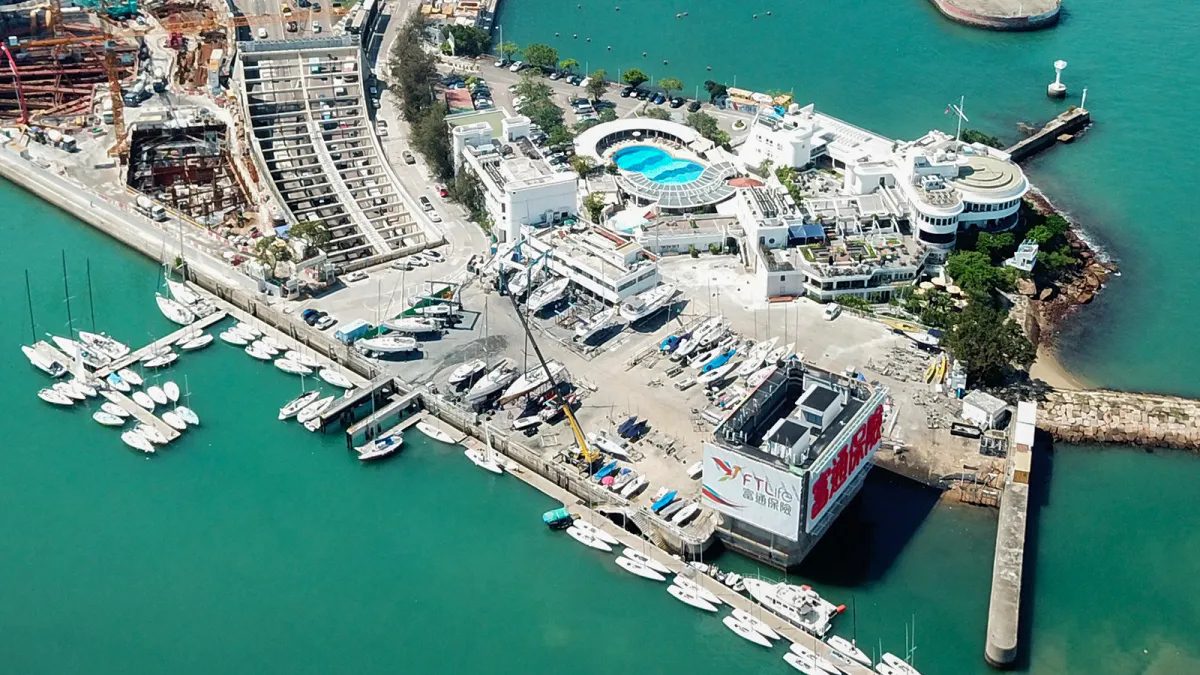
The Royal Hong Kong Yacht Club is the exception worth studying: it runs a debenture membership and clears the transfers itself, acting in its own words as "the sole clearing house for the transfer of Individual Debenture Memberships", with no transfers through agents permitted. Its current transfers page carries the whole log — sellers' asks, buyers' bids, completion dates — back to 2007.
The 2026 record is legible. Five transfers completed: HK$1,350,000 in March, HK$1,300,000 and HK$1,280,000 in June, and two more, HK$1,350,000 and HK$1,300,000, marked successful on 4 September. Sellers still ask HK$1,350,000, HK$1,320,000 and HK$1,400,000, the last excluding the transfer fee; a HK$1,800,000 ask from 8 July has found no buyer. Buyers bid HK$1,300,000 to HK$1,330,000 and found sellers.
The direction is plain. The highest asking price in the log is HK$2,480,000, listed on 10 September 2021 — five years ago this month; the earliest entries, from 2007, are HK$250,000. On the club's own evidence, a debenture here has cleared this year at a little over half the peak asking level.
Where clubs publish nothing, brokers publish something, and the something deserves suspicion. One listing board lists fourteen clubs, indicatively. Aberdeen Marina Club shows an individual membership at HK$5,000,000 first-hand, closed, against HK$3,100,000 second-hand and a HK$1,580,000 transfer fee. At Craigengower Cricket Club the second-hand quote of HK$1,450,000 sits above the closed first-hand price of HK$700,000 — the market pricing the club above the club's own book. Clearwater Bay Country Club quotes no fee, only a formula, "(Club Price − Debenture) / 2", which treats every transfer as a repricing. The Ladies Recreation Club's column reads "Stop Transfer".
Who holds the asset
The part that decides what any of it is worth appears on no membership page. Most of the land under Hong Kong's clubhouses is not owned by the clubs. It is held under private recreational leases from the government, historically at nil or nominal premium. Fifteen of the twenty-seven leases held by private sports clubs expire by the end of this year.
The repricing works like this. A club that stays privately operated pays a land premium equal to one-third of full market value, in instalments, with the valuation open to review through the Lands Department. A club that will not pay may convert to a community organisation, keep a nominal premium and open its facilities fully to the public instead — the premium traded for the membership. Renewing clubs also carry obligations already in force: a minimum 30 per cent of facility time open to outside bodies, and 240 sports programme hours a month. The golf club's Deep Water Bay site, 66,500 square metres, expires on 25 December 2026, as local reporting of the bureau's briefings sets out.
The Hong Kong Golf Club, the Chinese Recreation Club, the Craigengower Cricket Club and the Royal Hong Kong Yacht Club are all named as holders of such leases. Which of them are among the fifteen expiring this year has not been published. Market estimates of the premiums run from tens of millions of dollars to over HK$100 million, on a valuation that starts from the land with no buildings on it and then counts the lease's restrictions against it, as an industry analysis published this week sets out. The asset behind the entrance fee is a lease with a term. Nobody is selling freehold.
The fine print is the instrument
A worked example of how that ends. In June 2024 the American Club moved to redeem individual debentures at face value, HK$300,000, against secondary-market levels above HK$2,000,000. Reported coverage put a top-of-market buyer's loss at about HK$1,700,000, with rejoining offered at HK$1,500,000 and transfer fees deductible up to HK$750,000. The club said it was protecting its non-profit tax status, which needs half of operating revenue from voting members, a category open only to US citizens. After an outcry the plan was dropped. The redemption clause behind it had been in the documents from the beginning.
The club did not need a redemption to change what a debenture is worth. Its published admission rules now require an individual debenture nominee to find four referrals where a corporate nominee needs two, and 24 months of good standing for voting eligibility rather than 12. The instrument did not change; what it takes to make one useful did.
What December decides
The fifteen leases run out at the end of December and the negotiations are private. What is public is the arithmetic: a premium set at a third of market value, falling on clubs whose members are the only source of funds. A club that pays will reprice its memberships; a club that converts will reprice them differently, by opening the door. Either way the rate card moves, and the debenture, not the subscription, is where a sceptical buyer will see by how much.