The move: 50 years of monetary policy in three trading days
When US Treasury yields break through historic levels, the entire world's financial system recalibrates. On 25 September 2026, the 10-year note closed at 5.188%, down 38 basis points from its intraday peak but still marking one of the sharpest three-day climbs since the early 2000s. The surge began on 23 September, when better-than-expected US employment data and persistent inflation readings triggered a cascade of repricing across the bond complex.
The move is not a single event but a regime shift. For the past two years, bond markets have wrestled with the question of where neutral sits in a world of cooling inflation and slowing growth. The September data answered that question: growth remains too robust to signal rate cuts. The US jobs market added more than expected in August, wage growth has not rolled over despite Fed tightening, and inflation readings — both headline and core — remain sticky above the Fed's 2% target. Taken together, they form a simple message: the Federal Reserve is not done raising rates.
What is striking about the move is its breadth. The 2-year yield, most sensitive to near-term Fed expectations, rose 25 basis points. The 10-year rose 38 basis points. The 30-year climbed 35 basis points. This is not a "bear flattener" — a scenario where long-term yields fall on recession fears — but rather a wholesale repricing of the entire yield curve. Investors are bidding rates higher across every maturity, a signal that risk appetite has shifted and that real returns matter again.
Why 5% is not just a number
For family offices and pension funds, the 5% level on the 10-year carries real operational meaning. It is the threshold at which bond yields begin to compete seriously with equity dividend yields. At 5.188%, a 10-year Treasury now offers better yield than the S&P 500's dividend — roughly 1.3% — plus the certainty of getting your principal back. This crossover, rare in modern markets, changes behavior.
Historically, when long-term bond yields exceed 5%, several predictable shifts occur. First, capital rotates from growth equities to value and dividend-paying sectors. Second, emerging markets face capital outflows, as the carry trade becomes less profitable — when US rates are high and rising, borrowing in low-yielding currencies (like the yen) to invest in US Treasuries becomes the rational trade, not leveraged bets on emerging-market equities. Third, mortgage affordability deteriorates sharply. Every 25 basis points of upward movement in the 10-year adds roughly $50 on the monthly payment for a $400,000 home.
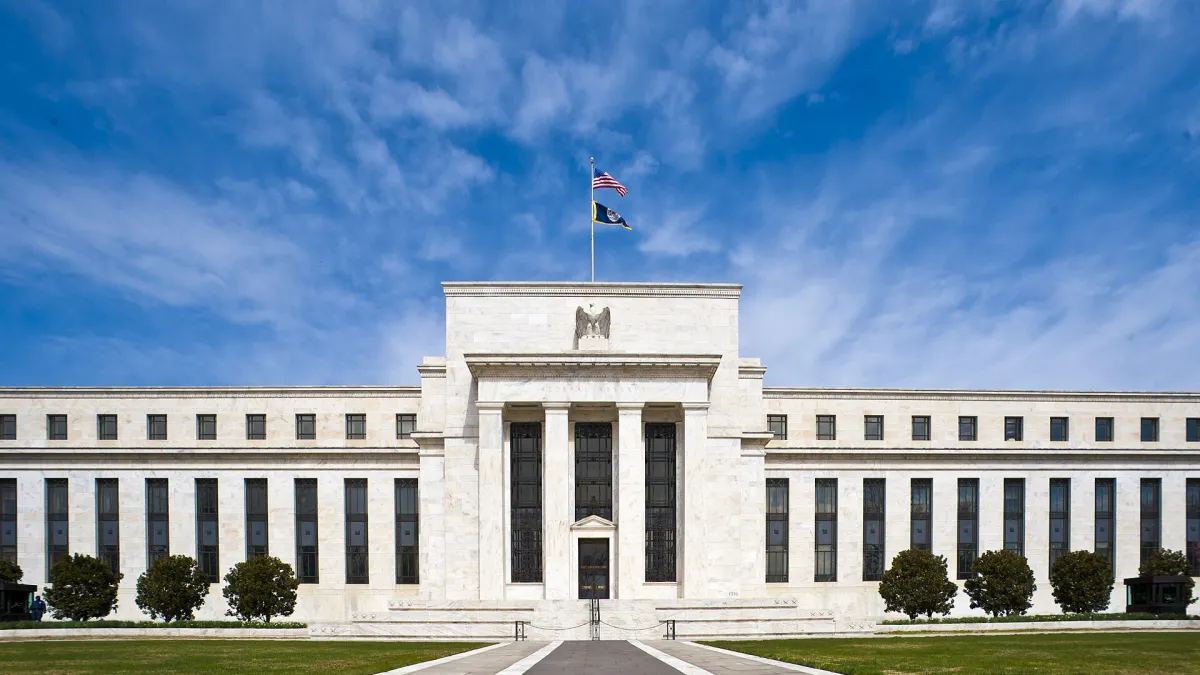
The Federal Reserve's rhetoric has added urgency to the move. Chair Jerome Powell and Fed Governor Michelle Barr have both signalled that the central bank is not "finished" with rate hikes if inflation does not cool further. This is the hawkish tone markets have learned to fear — it opens the door to a rate path higher than previously priced. The next FOMC meeting is scheduled for 17-18 November 2026, and markets are now pricing in a non-trivial probability of a 0.25% hike.
One number: the yield curve gap
The steepening of the yield curve tells a story about positioning and expectations. On 22 September, the spread between the 10-year and 2-year Treasury was 28 basis points — an inversion. By 25 September, that spread had widened to 67 basis points. This rapid steepening is unusual and typically signals two things: either recession fears are fading (because the curve is steepening from a deeply inverted state), or inflation fears are rising.
In this case, the evidence points to the latter. The 10-year TIPS (Treasury Inflation-Protected Securities) yield — adjusted for expected inflation — has also risen sharply, to approximately 2.15%, its highest level since 2010. This tells us that investors are repricing not just inflation expectations, but the real cost of capital in the economy. The Fed is no longer fighting the last war (low growth, low inflation). It is now fighting a new war: growth that refuses to cool, inflation that refuses to fall, and a labor market that remains historically tight.
What this means for Hong Kong
For Hong Kong's family offices, mortgage holders, and offshore renminbi traders, the yield surge carries immediate consequences. First, mortgage rates face pressure. The Hong Kong dollar is pegged to the US dollar, and HKMA's base rate typically tracks Fed movements within 25 basis points. If the Fed raises rates again in November or December, expect HKMA to follow. A 0.25% rise would push the prime lending rate from the current 5.875% to 6.125%, and average mortgage rates for refinancing would edge above 4.5%. For a HK$5 million property financed over 20 years, this adds HK$1,500 to the monthly payment.
Second, offshore CNY funding costs are rising faster than onshore costs. The interest rate differential between offshore US dollars (SOFR) and offshore yuan (CNH rates) has widened, making CNH borrowing relatively expensive for carry traders who bet on CNY appreciation. Portfolio managers who have been running leveraged CNY bets are seeing margins compress. If US yields remain elevated, capital will continue to favor US assets over CNY assets, putting downward pressure on the currency and reducing returns for those positioned long.
Third, emerging-market debt issuers from the region — particularly those rated below A — face a window closing. Companies that were planning to refinance maturing dollar debt at lower rates now face significantly higher borrowing costs. The cost of credit for high-yield corporate borrowers in Asia is approaching 8%, a level that begins to strain even strong balance sheets.
Next moves to watch
The question now is whether the 5% level holds or if yields continue higher. The next major data point is the Consumer Price Index reading on 10 October, which will give the market its first read on September inflation (the bond surge has been driven primarily by forward-looking Fed-speak, not fresh data). If that print comes in hot, yields could easily reach 5.5% on the 10-year. If it moderates, yields might find support and consolidate.
The Fed's next explicit signal will come on 17-18 November when the committee meets. Markets are watching for any shift in language that suggests the hiking cycle is truly over — a message that, given current data, Powell has not yet been willing to send. Until that message is clear, bond managers should expect elevated volatility and the possibility that recent moves are just the opening act.
Read The 10-year Treasury's round trip through 5%, and the auctions behind it for the mechanics of how supply and demand shape the Treasury market.