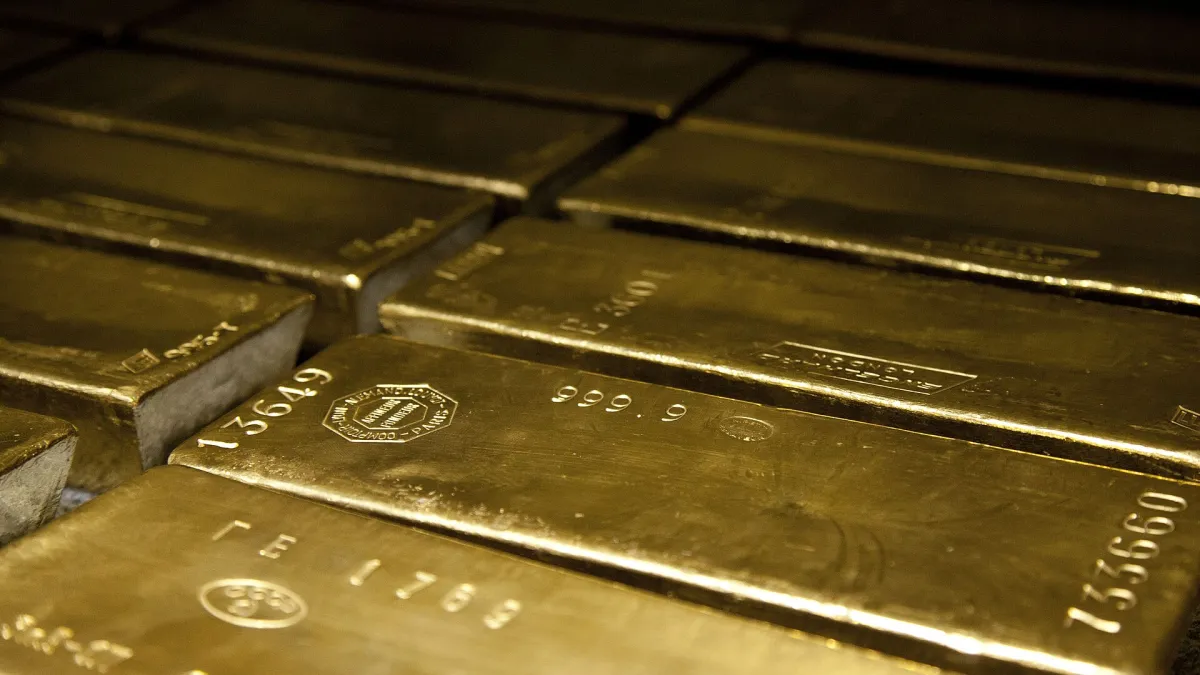
Gold has spent September 2026 camped in record territory around US$4,350 an ounce, and the most important buyer in the market still does not read research, does not take profits and does not attend conferences. The world's central banks have now been buying at better than a thousand tonnes a year for four years running — a streak far above anything seen in the decade before it — and they have done so through rallies that would have shaken out any buyer with a performance review. The result is a market with a new floor and the same old ceiling, and private wealth is still working out what that means.
Why the official sector moved
The catalyst is not mysterious. When Russia's central-bank reserves were frozen in 2022, every reserve manager outside the Western alliance system received the same memo: reserves held in someone else's currency are someone else's promise, revocable at the speed of a sanction. Gold is nobody's liability. It settles no obligation through a correspondent bank and answers to no court.
The buyers have been consistent and unembarrassed — Poland, India and Turkey adding openly, China accumulating in long public stretches, pausing when prices ran too hot and returning when they cooled, Singapore and others quieter but persistent. Note what this is not: a dethroning of the dollar, which remains the world's reserve currency by a distance that flatters no rival. It is the purchase of insurance against the dollar's terms changing. Insurance buyers are the best kind of bidder — price-insensitive, slow and permanent. That is why the bid has not flinched at record prices: the memo does not have a target zone.
A floor, not a cure
Official-sector demand changes the structure of sell-offs. When gold corrects now — and at US$4,350, the next correction is a question of when — it meets a buyer with a policy mandate rather than a profit target, and corrections that once ran for months find their level sooner. Dealers report thinner downside follow-through, and the pattern of higher lows across the four-year streak bears them out. That is a genuine change in the market's plumbing.
It does not repeal gold's nature. The metal still produces no cash flow, still corrects by double digits with no warning and no apology, and still answers to real yields over any horizon that matters — which makes the current tableau odd: records are being set with US 10-year Treasury yields around 5 per cent, a combination the old rule books would not have underwritten. Central banks raising the floor have not lowered the volatility; they have simply changed who is on the other side of panic selling. One oddity deserves attention: for long stretches of the rally, Western ETF investors were net sellers, meaning the price records were set without the crowd that set every previous one. Investors who bought the narrative expecting a one-way escalator have discovered, at intervals, that the stairs still exist.
How private wealth takes the exposure
The family-office argument is no longer whether to hold gold but in what form, and the forms are more different than their prices suggest. Allocated physical bars in a Zurich or Singapore vault are the purest expression of the original thesis: no counterparty claim, no fund structure, custody and assay costs paid in exchange for the asset being unambiguously yours. Exchange-traded funds are the efficient trading sleeve — cheap, liquid, and precisely the sort of financialised claim on gold that the central-bank thesis is hedging against. Miners are something else entirely: operating businesses with cost inflation, jurisdiction risk and management risk, a leveraged wager on the metal rather than the metal itself.
The grown-up allocation tends to a barbell: a permanent physical core that is never traded, and a liquid wrapper for expressing views. Jewellery and small bars still do much of this work in Asian households, quietly and without a ticker. What matters is matching the form to the purpose. Insurance should not be held in a form that depends on the system being insured against.
The open question for the rest of the decade is whether private investment demand joins the official bid in size. Central banks have carried this market for four years; Western fund investors have flirted, hedged and, more recently, returned as buyers. If the two ever buy together, the move will not be orderly. Watch the flow data, and watch whether the thousand-tonne pace survives contact with US$4,350.